

Restorative
Inlays & Onlays
Custom restorations for moderate tooth damage.
What are inlays and onlays?
Inlays and onlays, sometimes called indirect fillings, are custom restorations made in a dental laboratory and cemented permanently into or onto a back tooth. Unlike a direct filling, which is placed and shaped in a single appointment, these restorations are crafted outside the mouth under controlled conditions and then bonded in place.
The difference between the two is where the restoration sits on the tooth:
Inlay
Fits within the cusps (the raised points) of the tooth, restoring the central part of the chewing surface. Used when decay or damage is limited to this area and has not spread over the cusps.
Onlay
Extends over one or more cusps of the tooth. Used when damage is more extensive and covers more of the chewing surface, but still does not call for the full coverage of a crown.
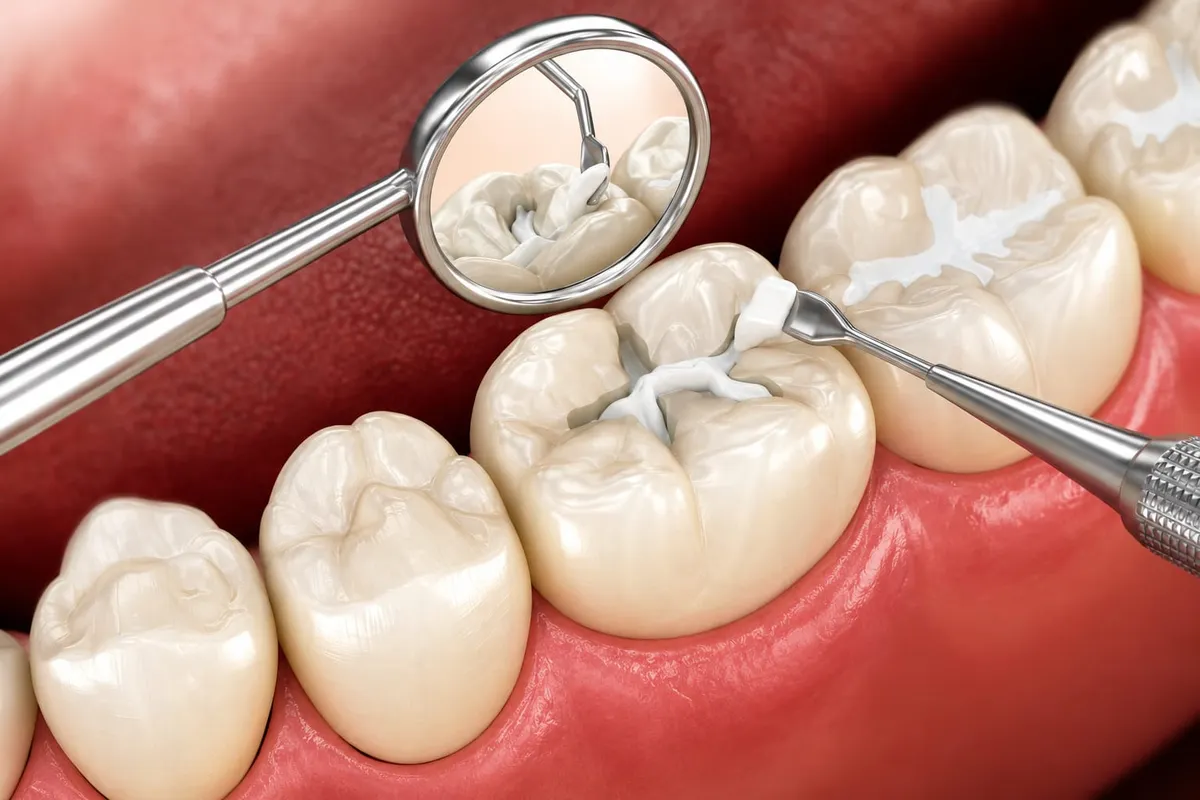
When inlays and onlays are used
Inlays and onlays sit in the middle ground of restorative dentistry. They are typically considered when:
- Decay or a fracture is too large to be reliably restored with a direct filling
- A significant part of the tooth has been lost, but enough sound tooth remains that a full crown would remove more structure than necessary
- An old, large filling has failed or is showing signs of cracking and needs replacing with a more durable restoration
The dentist will discuss the options with you and explain which restoration fits best, given the extent of the damage and where the tooth is.
Materials
Inlays and onlays are commonly made from ceramic (porcelain) or gold. The right material depends on where the tooth is, your bite, and your preferences for appearance.
Ceramic / porcelain
Closely matches the natural colour of the tooth and is a common choice for teeth that show when you smile.
Gold
Extremely durable, with a long track record. Often used in back molars, where strength is a priority and appearance matters less.
The procedure
An inlay or onlay takes two appointments:
Preparation and impressions (first appointment)
The tooth is numbed with local anesthetic and any decay or damaged structure is removed. The tooth is shaped to receive the restoration, and impressions are taken and sent to a dental laboratory, where the inlay or onlay is made. A temporary restoration protects the tooth in the meantime, typically for one to two weeks.
Permanent placement (second appointment)
The temporary is removed, and the lab-made restoration is checked for fit and bite. Once confirmed, it is bonded permanently to the tooth and polished, and any final bite adjustments are made before you leave.
How inlays and onlays compare to direct fillings
For smaller areas of decay, a direct composite filling placed in a single appointment is often the most appropriate choice. For larger restorations, inlays and onlays offer some practical advantages:
- Made in a laboratory under controlled conditions, which can allow a more precise fit and contour
- May be more durable than a large direct filling in teeth that take heavy chewing forces
- Keep more natural tooth structure than a full crown, which requires removing tooth material all the way around
The tradeoff is that inlays and onlays take two visits and include a laboratory fee. The dentist will recommend the restoration best suited to your situation.
Ready to Book?
Call us or book an appointment online. New patients are welcome.
Book Appointment 780-432-3430