
Endodontic Services
Treatment of Traumatic Dental Injuries
Care for teeth damaged by accidents or injury.
Types of traumatic dental injuries
Even when a tooth looks intact after an injury, the pulp inside can be affected in ways that are not obvious right away. Dental trauma covers a range of injuries, from minor knocks that leave the tooth looking unchanged to severe injuries involving fracture or displacement. Common types include:
Concussion and subluxation
The tooth is shaken by an impact but stays in its normal position. The supporting tissues may be tender, but the tooth has not moved.
Lateral luxation
The tooth is pushed sideways or at an angle in its socket, often with a fracture of the surrounding bone.
Intrusion
The tooth is driven further into the socket, pushing it up or down into the bone.
Extrusion
The tooth is partly pushed out of the socket. It may look longer than the others or feel loose.
Avulsion (knocked-out tooth)
The tooth is completely out of the socket. This needs immediate action: call 780-432-3430 right away. Time is a major factor in whether the tooth can be replanted. See knocked-out tooth treatment for what to do.
Crown fracture
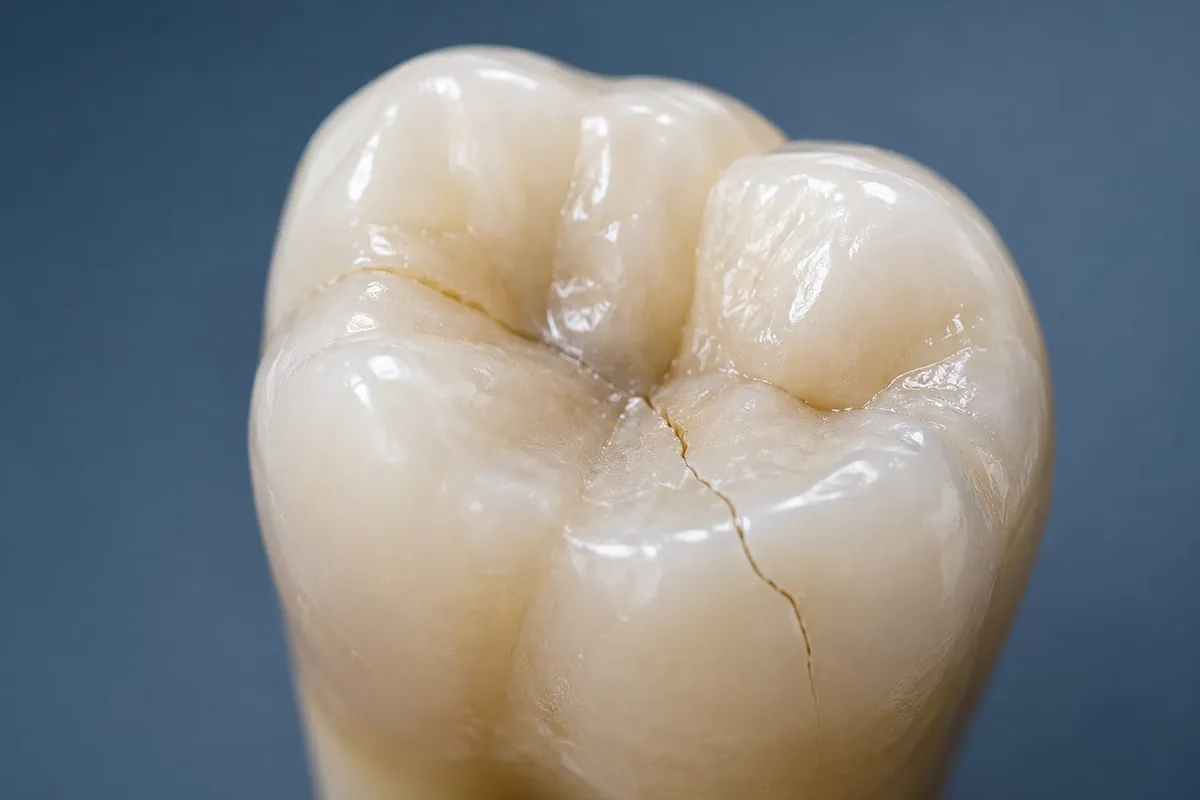
Part of the visible tooth breaks. It can range from a surface chip in the enamel to a fracture that reaches the dentin or pulp. See broken or chipped tooth repair.
Root fracture
A fracture in the root of the tooth, below the gum line. These can be hard to detect and may need x-rays taken from several angles.
Why dental trauma can affect the pulp
An impact can disrupt the blood supply to the pulp even when there is no visible crack or fracture. The nerves and blood vessels enter the tooth through the tip of the root, and they can be compressed or torn during an injury, especially when the tooth is displaced.
That means a tooth that looks fine right after an injury can still develop pulp problems over the following weeks or months. Sometimes the pulp recovers. Other times it becomes non-vital over time, which can lead to discolouration or infection. This is one reason follow-up monitoring matters after any dental injury.
What to do right after a dental injury
Call 780-432-3430 as soon as possible. Prompt assessment is important, especially for displaced or knocked-out teeth.
If a tooth has been knocked out completely, handle it by the crown, not the root surface. Keep it moist, either by placing it back in the socket if the person is alert and cooperative, or by storing it in milk or saline. Do not touch the root surface or let it dry out, because that affects the cells needed for reattachment.
If there is a more serious injury
Keep the person calm and comfortable. If there is significant injury to the lips, cheeks, or gums, or any concern about a head or neck injury, get medical attention first.
Assessment and monitoring
At the first visit, the dentist examines the injured tooth and surrounding tissue, takes x-rays, and assesses how much damage there is. Some pulp injuries cannot be detected right away. The tooth may test as healthy at first and develop problems later.
For that reason, follow-up visits in the months after a dental injury are an important part of care. Tooth colour, vitality, and x-ray appearance are tracked over time to catch any sign that the pulp is not recovering as expected.
Treatment options
Treatment depends on the type and severity of the injury and what the assessment finds. Options may include:
- Observation and monitoring, when the pulp appears healthy and the tooth is stable
- Splinting, when the tooth is loose or has been displaced, to hold it steady temporarily by attaching it to the neighbouring teeth
- Root canal treatment, if monitoring shows the pulp is non-vital or infected
- A crown or other restoration, to repair a fractured part of the tooth
- Extraction, only if the tooth cannot be kept because of the extent of the injury
Long-term follow-up
Injured teeth often need monitoring over months or years, not a single treatment. The pulp's response to trauma can change over time, and problems such as gradual discolouration, root resorption, or delayed infection can appear well after the original injury.
The dentist will recommend a monitoring schedule for your specific injury and explain what changes to watch for between appointments.
Ready to Book?
Call us or book an appointment online. New patients are welcome.
Book Appointment 780-432-3430