

Restorative
Crowns & Bridges
Restorations to repair or replace damaged or missing teeth.
What is a dental crown?
A dental crown is a custom-made cap that fits over and completely covers a damaged or weakened tooth. It restores the tooth's shape, size, strength, and appearance while protecting the tooth structure underneath.
Crowns are used in a number of situations: to protect a tooth after root canal treatment, to restore a tooth that is badly decayed or cracked, to support a dental bridge, or to strengthen a tooth that has fractured to the point where a filling is no longer enough.
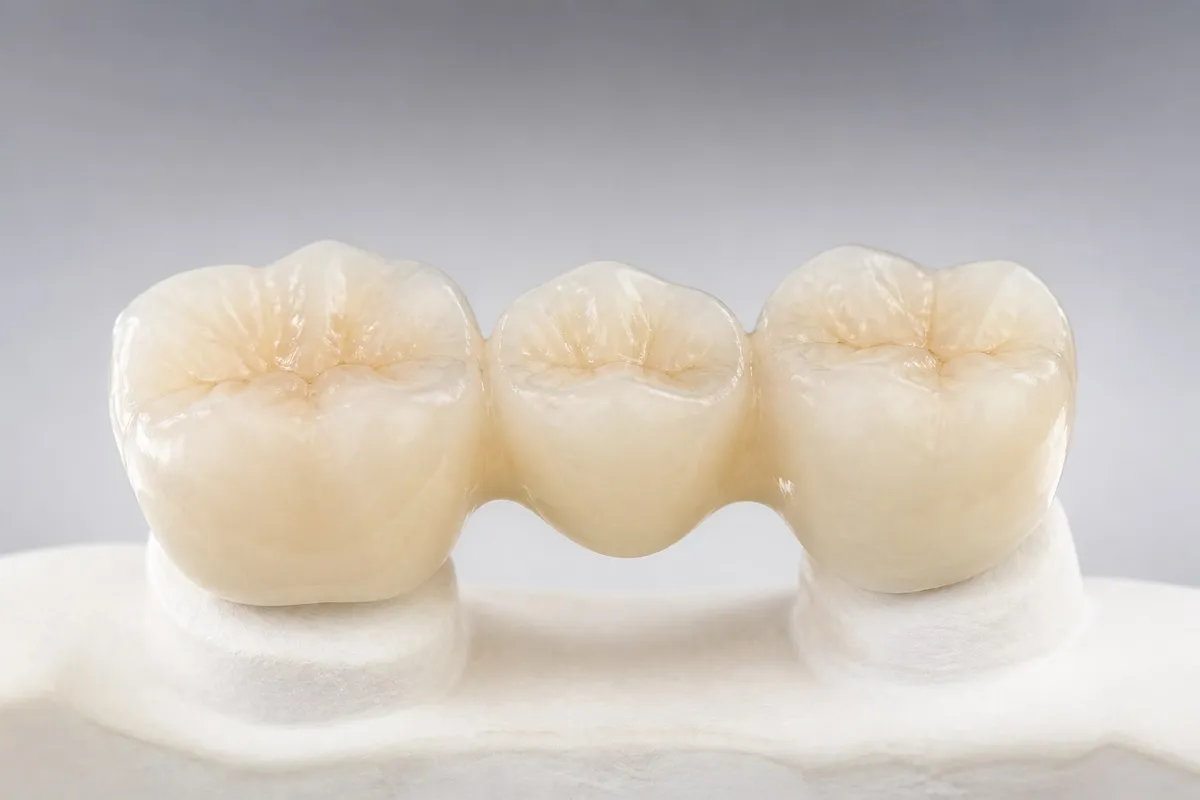
What is a dental bridge?
A dental bridge is a fixed restoration that replaces one or more missing teeth by anchoring to the natural teeth on either side of the gap. Those neighbouring teeth, called abutment teeth, are prepared and fitted with crowns, and the artificial tooth (or teeth) in between, called a pontic, is suspended between them to fill the space.
Once it is cemented permanently, a bridge looks, feels, and works much like natural teeth. It restores your ability to chew and speak comfortably, maintains the shape of your face, and keeps nearby teeth from shifting into the gap over time.
The procedure for a bridge is similar to a crown. The abutment teeth are prepared at the first visit, impressions are taken and sent to a dental laboratory, and a temporary restoration is placed while the permanent bridge is made. At the second appointment, the bridge is checked for fit, bite, and appearance before it is cemented permanently.
Crown and bridge materials
The material depends on the tooth's location, your bite, and how important appearance is for that tooth. The dentist will talk through which option suits your situation.
Porcelain (all-ceramic)
The most natural-looking option. Porcelain closely mimics the translucency of natural enamel and is typically recommended for front teeth, where appearance is a priority.
Porcelain-fused-to-metal (PFM)
A porcelain exterior bonded to a metal substructure, combining strength with a natural look. A good option for back teeth that need extra durability.
Full metal
Metal restorations, such as gold or base-metal alloys, are extremely durable and need less tooth reduction than other types. They are sometimes used for back molars where the restoration will not be visible.
The procedure
Both crowns and bridges usually take two appointments:
Preparation and impression
The tooth or abutment teeth are shaped to make room for the restoration. Impressions are taken and sent to a dental laboratory, and a temporary crown or bridge is placed while the permanent one is made, typically over one to two weeks.
Permanent placement
The temporary restoration is removed, and the permanent crown or bridge is checked for fit, colour match, and bite before it is cemented in place.
How long do crowns and bridges last?
With proper care, crowns and bridges commonly last many years. How long they last depends on the material, where they are in your mouth, your bite, and your home care routine.
To help your restoration last, avoid chewing very hard foods such as ice or hard candies on the restored tooth. If you grind your teeth at night, a night guard may be recommended to protect both the restoration and your other teeth.
What to expect after placement
Some sensitivity to temperature or pressure right after placement is normal and usually settles within a few days as the tooth adjusts. If discomfort persists or your bite feels uneven, call 780-432-3430 so the dentist can make any adjustments needed.
Care for a crowned tooth or bridge just as you would your natural teeth. Brush twice a day, floss daily (using a floss threader or interdental brush under the bridge), and keep up with regular checkups. The dentist checks the restoration at each visit.
Ready to Book?
Call us or book an appointment online. New patients are welcome.
Book Appointment 780-432-3430