

Diagnostic Services
Intraoral Cameras
Small cameras that provide detailed images of your teeth and gums for better understanding and care.
What is an intraoral camera?
An intraoral camera is a small, pen-shaped device with a camera and light at the tip. It is used during exams to capture close-up images and video of the inside of your mouth (your teeth, gums, and surrounding tissue), which are shown on a screen in real time.
The device is comfortable to use and produces no radiation. It is a visual tool, used alongside x-rays and a clinical exam rather than as a replacement for them.
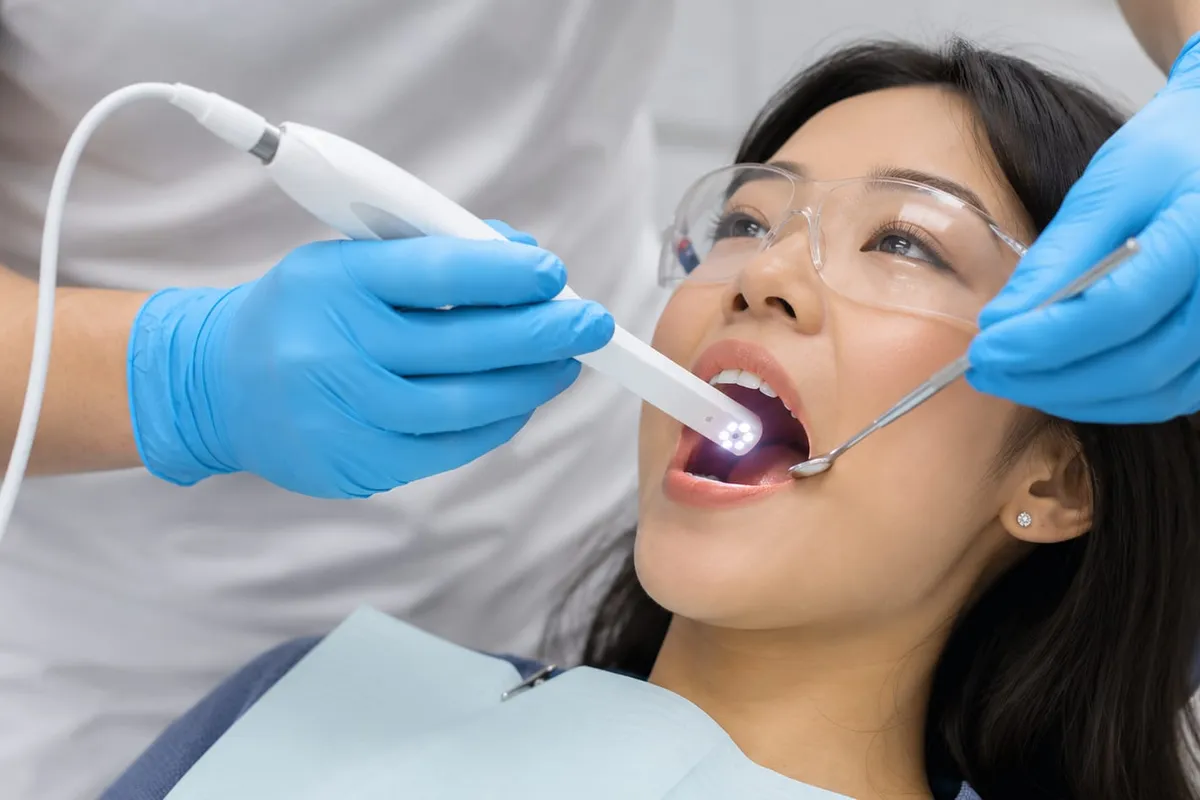
What intraoral cameras can show
The camera produces magnified, high-resolution images that make it easier to see detail that may not be obvious to the naked eye during a standard exam. This can include:
Early decay
Discolouration or changes in the tooth surface that may signal the start of a cavity, especially on the biting surfaces of back teeth, where grooves can be hard to inspect by eye.
Cracks and fractures
Fine cracks in enamel can be hard to see without magnification. The camera can make them visible for further assessment.
Worn or damaged restorations
Old fillings, crowns, or other restorations can chip, crack, or break down over time. The camera records their current condition so changes can be monitored.
Gum tissue appearance
Whether the gums look healthy, inflamed, or otherwise changed can be captured and discussed with you directly.
Seeing what the dentist sees
One practical benefit of intraoral cameras is that the dentist can share findings with you directly. Instead of relying on a description alone, you can see an image of the area of concern, which often makes it easier to understand what is happening and to ask questions.
Images can also be saved to your records and compared at future appointments, which helps track how an area is changing over time. This is especially useful when watching a tooth or area that does not need treatment yet but should be kept under observation.
Used alongside other diagnostic tools
Intraoral cameras show the surfaces of the teeth and gums, but they cannot see between teeth or below the gumline the way x-rays can. They work best as a complement to a thorough clinical exam and appropriate imaging: they give a clearer picture of what is visible on the surface, while other tools show what lies beneath.
Ready to Book?
Call us or book an appointment online. New patients are welcome.
Book Appointment 780-432-3430