

Endodontic Services
Root Canal Treatment
Treatment to remove infection and save a damaged tooth.
What is root canal treatment?
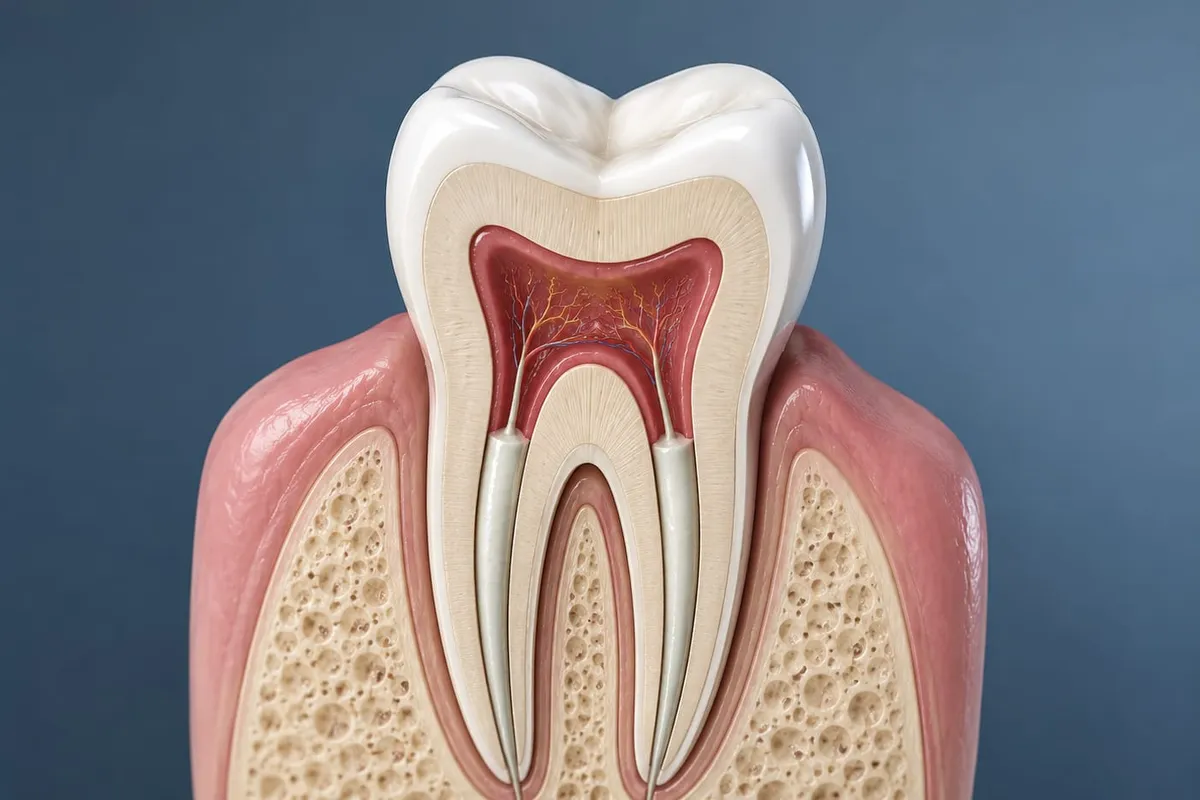
Inside every tooth is a soft tissue called the pulp, which contains nerves and blood vessels. When the pulp becomes infected or badly inflamed, because of deep decay, a crack, repeated dental work on the tooth, or trauma, root canal treatment can remove the damaged tissue and save the tooth.
A common misconception is that root canal treatment is especially painful. In fact, it is done under local anesthetic and is meant to relieve the significant pain an infected tooth causes. Most patients say the procedure feels similar to having a filling placed.
When is root canal treatment needed?
Root canal treatment is usually recommended when the pulp inside a tooth is infected or has died. Signs that may point to a pulp problem include:
- Severe or persistent toothache, especially when biting or pressing on the tooth
- Sensitivity to heat or cold that lingers after the source is gone
- Swelling or tenderness in the gum near a tooth
- A visible abscess (a pimple-like bump on the gum)
- Darkening or discolouration of the tooth
- Deep decay that has reached the inner pulp
None of these symptoms is definitive on its own. An exam and x-rays are needed to confirm whether root canal treatment is necessary.
The root canal procedure
Root canal treatment is usually completed in one or two appointments:
Local anesthetic
The tooth and surrounding area are numbed. You should feel pressure during the procedure, but not pain. If you feel anxious, talk with the dentist about comfort options, such as nitrous oxide, before starting.
Access opening
A small opening is made through the top of the tooth to reach the pulp chamber and root canals.
Pulp removal and canal cleaning
The infected or inflamed pulp tissue is carefully removed. The canals are then cleaned, shaped, and disinfected to clear out bacteria and debris.
Filling the canals
The cleaned canals are filled with a biocompatible material called gutta-percha, which seals the space and helps prevent reinfection.
Sealing and crown placement
The access opening is sealed. Because the tooth is more brittle without its pulp, it is usually protected with a dental crown, typically placed at a separate appointment.
After treatment
Some tenderness in the treated tooth and surrounding area for a few days is normal. Over-the-counter pain relievers are usually enough to manage it. Avoid chewing hard foods on that side until the permanent crown is in place.
Once the crown is fitted, care for the tooth like any other: brush, floss, and keep up with regular checkups. With good care, a treated tooth can work well for many years.
What if I choose not to have root canal treatment?
When root canal treatment is recommended, the main alternative is extraction, removing the tooth entirely. Extraction clears the infection, but it leaves a gap that can affect your bite, jaw alignment, and bone health over time. Replacing the tooth with an implant, bridge, or denture adds time and cost.
Saving a natural tooth with root canal treatment is generally the preferred approach when the tooth can be successfully treated and restored. The dentist will go over all the options with you so you can make an informed decision.
Ready to Book?
Call us or book an appointment online. New patients are welcome.
Book Appointment 780-432-3430